English| EUR
Suggested for you
More currencies
Choose a language
Most visitors searching for information on buggy incidents in Marrakech are not panicking — they are doing homework before booking a dune circuit through the Palmeraie. The honest answer involves loose sand, rider inexperience, and a handful of rules that reputable operators enforce without exception. This buggy marrakech accident guide sets out what goes wrong, how often, and what you control.
Quick answer
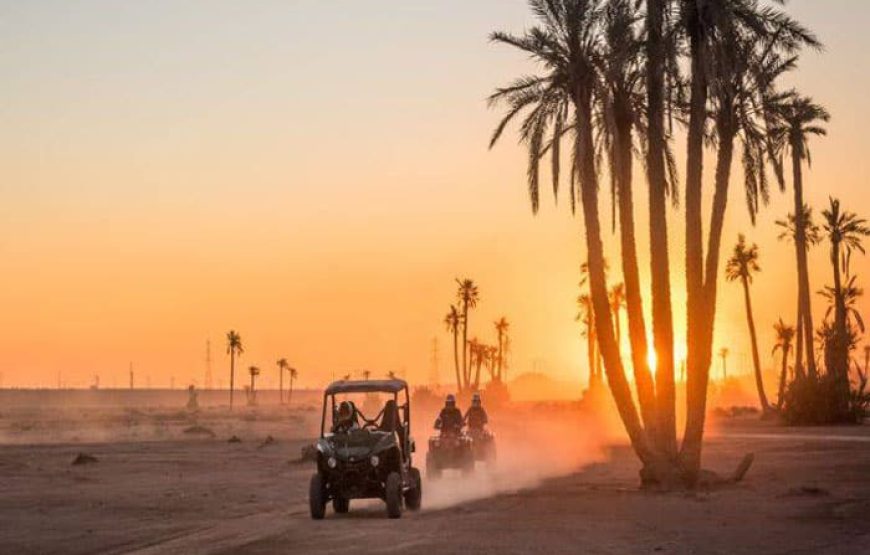
Serious buggy accidents in the Palmeraie are uncommon, and the majority of reported incidents are low-speed rollovers on soft sand or collisions between riders travelling too close together. Operators run daily from 09:00–18:00, and the 09:00–11:00 window carries the lowest risk: cooler air, better contrast on the terrain, and fewer vehicles sharing the same tracks through the palm groves.
The Palmeraie covers roughly 13,000 hectares of palm grove on the northeastern edge of Marrakech, and almost none of its buggy tracks are paved. That single fact explains most of what goes wrong. Sand absorbs steering input unpredictably, irrigation channels cut across the piste without warning, and the hard-packed ochre crust that feels like tarmac in the morning turns powdery by mid-afternoon. A buggy marrakech accident is far more often a slow tip-over into a berm than a dramatic high-speed crash. The second factor is rider inexperience. Most people who book a Marrakech buggy tour have never driven a side-by-side before. Reputable operators counter this with a briefing, a lead guide who sets the pace, and a strict single-file spacing rule through the groves. Problems cluster where that structure breaks down: riders who close the gap to the vehicle ahead and lose visibility in its dust plume, riders who accelerate on a straight and arrive at a bend too fast, and riders who take a hand off the wheel for a photograph. Helmets, harnesses and roll cages are standard on modern fleets, which is why the injury profile skews toward bruising and sprains rather than anything graver. Context matters for the legal side too. Morocco treats these circuits as off-road guided excursions, not public-road driving, so liability runs through the operator's own insurance and waiver rather than a standard rental policy. Many European travel insurers exclude quad and buggy activity unless it is declared, so the paperwork is worth reading before departure. Ask what cover applies, what the excess is, and whether a guide accompanies every group. What to do with all this is simple enough. Choose an operator that briefs properly and supplies full protective gear, declare the activity to your insurer, keep three vehicle lengths of clear air ahead of you, and treat the autumn light as part of the safety equation rather than a bonus. Readers using this buggy marrakech accident guide alongside the dedicated mistakes, timing and access sections of this site will have covered the realistic risks of Marrakech desert excursions without inventing imaginary ones.
“Sand absorbs steering input unpredictably, and the crust that feels like tarmac at nine turns powdery by three.”
Most buggy incidents in the Palmeraie come down to a handful of avoidable rider habits, not difficult terrain. Knowing them before the safety briefing starts makes the whole convoy safer.
Riding too close to the buggy ahead
Hold a gap of at least two buggy lengths so dust clouds do not blind you and you have braking room on loose sand. Guides set the spacing during the briefing; keep it even when the lead vehicle speeds up.
Treating the guide's hand signals as optional
Learn the signals for slow, stop and single file before setting off, and ask the guide to repeat any you missed. They are the only reliable communication once engines are running.
Skipping or loosening the helmet, goggles and seatbelt
Wear all protective gear supplied and have staff check the fit before the first turn. Palmeraie tracks throw up fine grit that makes unprotected eyes close involuntarily at speed.
Overtaking within the convoy to get better photos
Stay in your assigned position and shoot only when the group is stopped. Overtaking on single-track palm groves is where most collisions between tour buggies happen.
Accelerating hard into soft sand or dry irrigation channels
Ease off the throttle and steer straight through dips rather than braking mid-turn, which is what rolls a light buggy. Follow the exact line the guide takes.
Driving in sandals, loose scarves or unsecured clothing
Wear closed shoes and tie back anything that can catch in the roll cage or controls. Secure phones and loose items in a zipped pocket before departure.
Hiding a medical condition or alcohol use from the operator
Tell the operator in advance about back, neck or heart conditions, pregnancy, or medication. Never ride after drinking; operators can refuse participation on safety grounds.
The best arrival window is 09:00–11:00 to minimize exposure to peak heat. Operating a buggy during the coolest part of the day reduces physical fatigue, which is a key factor in maintaining focus and avoiding accidents.
Pleasant, 20°C–28°C
Ideal conditions for navigating the terrain safely.
Extreme heat, 35°C–40°C
High temperatures cause rapid fatigue and poor decision-making.
Mild, 22°C–30°C
Good visibility and manageable temperatures for driving.
Cool, 10°C–20°C
Morning air is crisp and comfortable for long tours.
Verdict: The optimal period is between 09:00–11:00 during the months of April or October to ensure the safest driving conditions.
Buggy Marrakech experiences in the Palmeraie operate daily throughout the week. Staff are present to facilitate tours during the following designated hours.
Access to the Palmeraie area is open to the public without an entrance fee. Costs only apply to specific recreational activities such as guided buggy tours.
Verdict: While the Palmeraie area itself costs 0 MAD to enter, total expenditure depends entirely on the specific buggy excursion package selected through a provider.
The Palmeraie is located on the northeastern outskirts of Marrakech. For safety and reliability, most visitors reach their designated buggy tour starting point via pre-arranged transport or licensed taxis.
Direct transfer to Palmeraie via Avenue Bab El Khemis
N9 highway toward Casablanca, exit at Palmeraie
Line 13 from Place Jemaa el-Fna to Palmeraie area
Confirm your exact meeting point with your tour operator prior to departure, as the Palmeraie covers a vast area. Using a pre-booked transfer ensures direct arrival at the correct staging location.
Everything you need to know about buggy marrakech accident
To prevent a buggy marrakech accident, always follow your lead guide's instructions, maintain a safe distance from other vehicles, and strictly avoid reckless maneuvers on uneven terrain. Operating these machines requires full attention to the sandy tracks and changing landscape of the Palmeraie.
Yes, all reputable operators include experienced local guides who lead the convoy and monitor the pace to ensure the group remains safe during your Marrakech buggy tour. These guides are trained to handle vehicle maintenance and provide assistance if mechanical issues arise.
In the event of a buggy marrakech accident, remain calm and alert your guide immediately so they can provide support and coordinate any necessary logistics. Professional tour organizers have established protocols for handling such incidents, including access to medical assistance if required.
Most excursions are designed for beginners, as operators provide an initial briefing on vehicle controls and safety procedures to reduce the risk of a buggy marrakech accident. Staying within your comfort zone and following the designated path ensures an enjoyable experience without unnecessary hazards.
Operators provide mandatory safety gear, including helmets, goggles, and often gloves, to protect you from dust and debris during your Marrakech desert drive. Wearing appropriate clothing, such as long pants and closed-toe shoes, further enhances your personal safety while navigating the dunes.
While reputable tour providers carry liability insurance for their operations, travelers are encouraged to verify that their own personal travel insurance covers adventurous off-road activities. Understanding your coverage limits provides peace of mind before engaging in a high-adrenaline sport.
Participation policies vary by operator, but children are typically required to be of a certain age to ride as passengers in the all-terrain vehicles. Many tours enforce minimum age limits to ensure that all riders can safely handle the motion and terrain of the desert tracks.
Most providers require drivers to possess a valid driver’s license and meet a minimum age threshold to operate the machinery. Confirming these specific requirements with your chosen provider during the booking process helps ensure you are fully prepared for your off-road experience.